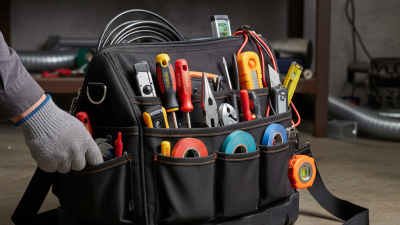
| Compact Tool Pouch |
3–8 L |
Open-top or semi-open design with a few exterior pockets and a belt loop |
Driver, pliers, tape measure, utility knife, fasteners, and a small number of hand tools |
Service technicians, electricians, installers, and maintenance workers performing short tasks |
Lightweight, quick access, easy to carry on a belt, and suitable for keeping essential tools within reach |
Limited capacity; provides little protection for bulky or delicate equipment |
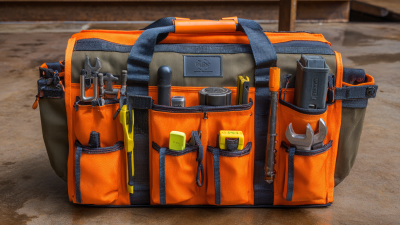
| Open-Top Tote Bag |
12–25 L |
Wide rectangular opening with internal compartments and exterior slip pockets |
Hand tools, cordless drill, chargers, small boxes of hardware, and personal protective equipment |
General contractors, carpenters, electricians, and property maintenance professionals |
Fast tool visibility, broad access, flexible storage, and a practical balance between capacity and portability |
Tools can shift during transport; contents are exposed to rain and dust unless the bag has a cover |
| Zippered Tool Bag |
10–30 L |
Single main compartment with a full-length zipper and optional internal or external pockets |
Hand tools, measuring devices, small power tools, cables, and consumables |
Field service, HVAC maintenance, electronics installation, and repair work |
Enclosed storage helps prevent tool loss and offers better protection from dust and light moisture |
Access is slower than an open tote; a narrow opening can make larger tools difficult to retrieve |
| Structured Tool Bag |
20–40 L |
Rigid or semi-rigid base, reinforced walls, vertical tool pockets, and a wide opening |
Mixed hand tools, one or two cordless tools, batteries, chargers, and job-specific accessories |
Electricians, plumbers, installers, and service professionals who carry a daily tool assortment |
Stays upright, improves organization, protects contents, and makes individual tools easier to identify |
Heavier and less compressible than soft bags; may occupy more vehicle or storage space |
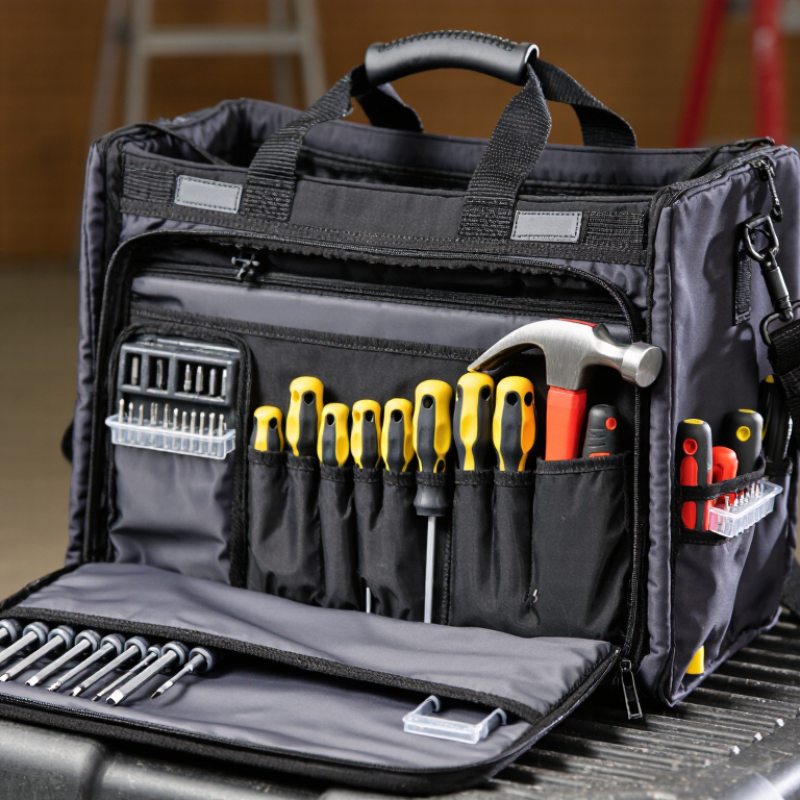
| Drill and Power Tool Bag |
8–20 L |
Padded central compartment with dividers or sleeves for a drill, batteries, charger, and accessories |
One or two cordless tools, batteries, charger, bits, blades, and small hand tools |
Carpenters, installers, electricians, and mobile repair workers using cordless equipment |
Protects power tools, separates batteries and accessories, and reduces unnecessary carrying weight |
Specialized layout can waste space when carrying a large selection of hand tools |
| Rolling Tool Bag |
30–70 L |
Large internal compartment, multiple pockets, telescoping handle, and two or four wheels |
Power tools, hand tools, batteries, chargers, test equipment, and job-site supplies |
Contractors and technicians transporting heavy tool loads across offices, buildings, or job sites |
Reduces lifting strain, carries more equipment, and provides organized storage for larger tool collections |
Bulkier on stairs and uneven ground; wheels and handles add weight and can wear over time |
| Backpack Tool Bag |
20–40 L |
Multiple vertical compartments, padded back panel, shoulder straps, and often a reinforced base |
Hand tools, compact power tools, meters, laptop or tablet, safety equipment, and small parts |
Electricians, network installers, telecom technicians, and workers who climb stairs or ladders |
Leaves both hands free, distributes weight across the body, and works well in confined or elevated locations |
Weight must be packed carefully; deep compartments may make small tools harder to locate |
| Tool Bucket Organizer |
15–25 L |
Flexible organizer fitted around a bucket, with numerous exterior pockets and an open center |
Hand tools, fasteners, sealants, small parts, and frequently used accessories |
Maintenance, plumbing, landscaping, construction finishing, and quick-access repair tasks |
Excellent pocket count, inexpensive format, fast access, and useful for separating small tools and supplies |
Usually lacks a secure closure and offers limited protection against impact, rain, and theft |
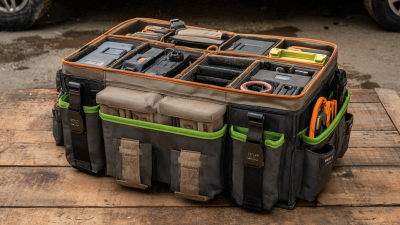
| Modular Tool Storage Bag |
25–60 L per connected unit |
Stackable or attachable bags, removable organizers, reinforced bases, and interchangeable compartments |
Mixed hand tools, power tools, batteries, parts organizers, and trade-specific equipment |
Professional tradespeople who need to expand or reconfigure storage for different jobs |
Highly adaptable, supports job-specific packing, and can separate heavy tools from small components |
Usually costs more and may become heavy or cumbersome when several modules are connected |
| Water-Resistant Tool Duffel |
35–80 L |
Large zippered cavity with reinforced handles, shoulder strap, and limited internal organization |
Bulky power tools, extension cords, protective equipment, workwear, and irregularly shaped supplies |
Construction crews, outdoor maintenance teams, and workers transporting high-volume equipment |
High capacity, flexible shape, easy loading, and suitable for oversized items |
Lower tool visibility and organization; water-resistant fabric is not always fully waterproof |
| Technician Case or Semi-Rigid Case |
8–25 L |
Hard or semi-rigid shell with fitted foam, removable trays, or dedicated instrument compartments |
Test meters, diagnostic instruments, precision tools, connectors, and sensitive electronic equipment |
Instrumentation, automation, electronics repair, laboratory service, and calibration work |
Provides strong impact protection, controlled organization, and improved protection for sensitive equipment |
Less flexible than a fabric bag and typically offers lower capacity for bulky tools |