How to Choose the Best Musical Carrying Bag for Your Instruments?
Choosing the right musical carrying bag can feel overwhelming. Different instruments require different types of protection. From guitars to violins, each needs a tailored solution.
When selecting a musical carrying bag, consider your instrument's size and shape. The best bags are padded and lightweight. Look for compartments to hold accessories like tuners or rosin. Some bags are waterproof, which is beneficial if you perform outdoors.
Reflect on your lifestyle. If you travel frequently, a durable bag might be necessary. However, not all bags offer the same level of protection. Make sure to test the bag's fit. Does your instrument feel secure? A good bag can prevent costly damages, but finding the right one takes effort.
Factors to Consider When Selecting a Musical Carrying Bag for Instruments
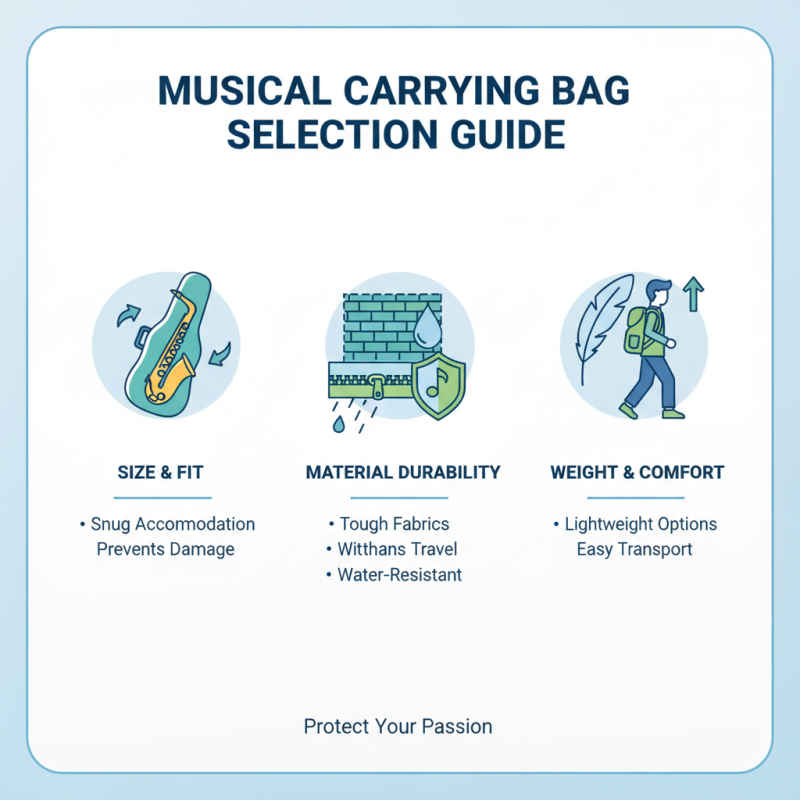
When selecting a musical carrying bag, size matters. Ensure the bag accommodates your instrument snugly. A poorly fitting bag can lead to damage during transport. The material of the bag is crucial too. A durable fabric can withstand the rigors of travel. Lightweight options are often more manageable. Consider water-resistant materials if you travel in varying weather conditions.
Padding is another key factor. Look for ample cushioning to protect your instrument. Straps play a vital role as well. Adjustable straps provide comfort while carrying. Ergonomic designs help distribute weight evenly. You might want to check pockets for accessories, such as sheet music or maintenance tools. Openings should be easy to access for a quick grab.
Reflect on your typical travel scenarios. A bag that works for short trips may not suit longer journeys. Think about your personal style too. A bag should resonate with you aesthetically. The right choice often balances function and fashion. This decision can feel overwhelming. Take your time to explore options and try different styles.
Types of Musical Bags: Soft Cases vs. Hard Cases and Their Pros and Cons
When choosing a musical carrying bag, consider the major types: soft cases and hard cases. Soft cases are lightweight and provide basic protection. They are often more affordable and easier to carry. However, they might not offer sufficient defense against severe impact or harsh weather conditions. Musicians often prefer soft cases for gigging due to their portability.
On the other hand, hard cases provide robust protection. They are made from durable materials that can withstand drops and impacts. This is crucial for valuable instruments. However, hard cases can be bulky and heavy, making them less convenient for travel. Think about the level of protection you need before making a choice.
Tips: Always check the padding in a bag. A well-padded case prevents damage during transport. If you are traveling often, a lightweight option is better. But for long-term storage, a hard case is wiser. Don't rush your decision. Test different bags to find the best fit for your instrument and lifestyle.
Material Durability and Protection Level: What to Look For in Carrying Bags
When considering a musical carrying bag, material plays a crucial role. Look for bags made from strong synthetics or durable fabrics. These materials offer better protection against scratches and impacts. Think about how your instrument feels during transport. A padded interior can be a lifesaver on bumpy rides. Check if the exterior fabric is water-resistant, too. This can shield against unexpected weather.
Tips: A bag with reinforced seams can prolong its life. Always inspect the zippers. A faulty zipper can lead to unexpected spills or drops. Look for adjustable straps that provide a comfortable fit. This helps when you're on the move.
It’s essential to assess the weight of the bag. A heavy bag can be cumbersome, especially during long walks. Sometimes heavier materials provide better protection, which is a trade-off. Don’t overlook the size of the bag. A poorly fitting bag may not offer adequate protection. You may find yourself reconsidering your choice after a few trips. Aim for a balance between durability and convenience.
How to Choose the Best Musical Carrying Bag for Your Instruments?
| Material |
Durability Level |
Protection Level |
Weight |
Price Range |
| Nylon |
Moderate |
Light Protection |
1.5 lbs |
$30 - $50 |
| Canvas |
High |
Moderate Protection |
3.0 lbs |
$50 - $80 |
| Polyester |
Moderate |
Light Protection |
2.0 lbs |
$25 - $45 |
| Leather |
Very High |
Heavy Protection |
4.0 lbs |
$100 - $200 |
| Rugged Fabric |
High |
Very Good Protection |
2.5 lbs |
$60 - $90 |
Sizing Your Instrument: Importance of Proper Fit for Optimal Protection
Choosing the right musical carrying bag is essential. A good bag protects your instrument, especially during transport. The fit of the bag should closely match the size of your instrument. If it's too loose, your instrument can shift. This is a recipe for scratches and dents. Too tight, and the instrument may not fit at all.
Proper sizing is something many overlook. An ill-fitting bag can lead to long-term damage. Look carefully at measurements. The length, width, and depth are crucial. A poorly sized bag can be frustrating. You may end up having to buy another one, wasting time and money. It's a small detail, yet it can make a big difference.
Always check for padding and protection features. Ensure that your instrument is well-cushioned. Try fitting your instrument into different bags. Take your time in choosing. It’s worth the effort. Finding the perfect fit may take several attempts. Don't rush it. A well-fitted bag means peace of mind when traveling. You can focus on your music, not your gear.
Additional Features: Backpack Straps, Pockets, and Protection Enhancements
When choosing a musical carrying bag, consider additional features that enhance utility. Backpack straps can transform the bag's functionality. They allow for hands-free transport, which is ideal for busy musicians. Having both shoulder and backpack straps gives you flexibility. You can switch up how you carry your instruments.
Pockets also make a significant difference. They provide space for accessories, sheet music, or other essentials. An organized bag makes finding items easier. It reduces stress during performances or rehearsals. Without proper pockets, you may end up sifting through a chaotic bag.
Protection enhancements are crucial too. Look for bags with padded interiors. This feature safeguards your instrument from bumps during transport. Inadequate padding may lead to damages, which can be costly. Consider water-resistant materials for unexpected weather changes. Rain can ruin your instrument, leaving you frustrated and unprepared.
Instrument Carrying Bag Features Comparison